
Utility ducting and coordinated multi-utility routes

One trench, several services, one programme. We design and install underground ducting to Street Works UK guidance — so a site is opened once rather than three times by three contractors who never spoke to each other.

Burst pipe or major leak?Call 0800 520 0043

The service

The expensive part is opening the ground. Do it once.

Most of what a utility installation costs is not the duct. It is the excavation, the traffic management, the reinstatement and the programme time — and every one of those is paid again each time a different contractor arrives to install a different service along roughly the same line.

Coordinated ducting solves that. Routes are planned together, the trench is opened once, and ducts for water, power, telecoms and anything else the site needs are laid at their correct relative positions and depths in a single operation. Ducts are colour-coded and marked so the next person to dig knows what they are looking at, and draw ropes are left in so cabling can follow later without reopening anything.

We install ducting for water and allied utilities including UKPN cable ducting, handle road crossings and highway works, and record the finished layout properly — which is what makes the route usable rather than a puzzle for whoever comes next.

What we do

Design the corridor, lay it once, prove it works.

A duct nobody can find, or cannot pull a cable through, has cost you the excavation and delivered nothing. All three stages below exist to stop that.

Traffic management in place for utility works on a residential street
Corridor designed first
01

Plan the corridor around what is already there

Before a trench line is fixed, we establish what is already underground and where the new services can sit at correct separations. Getting the corridor right at design stage is what allows several utilities to share one excavation without any of them ending up too close to another or too shallow under a road.

  • Existing services traced and the corridor set around them
  • Relative positions and depths planned per Street Works UK guidance
  • Road and access crossings identified early
  • Duct sizes agreed with the utilities that will use them
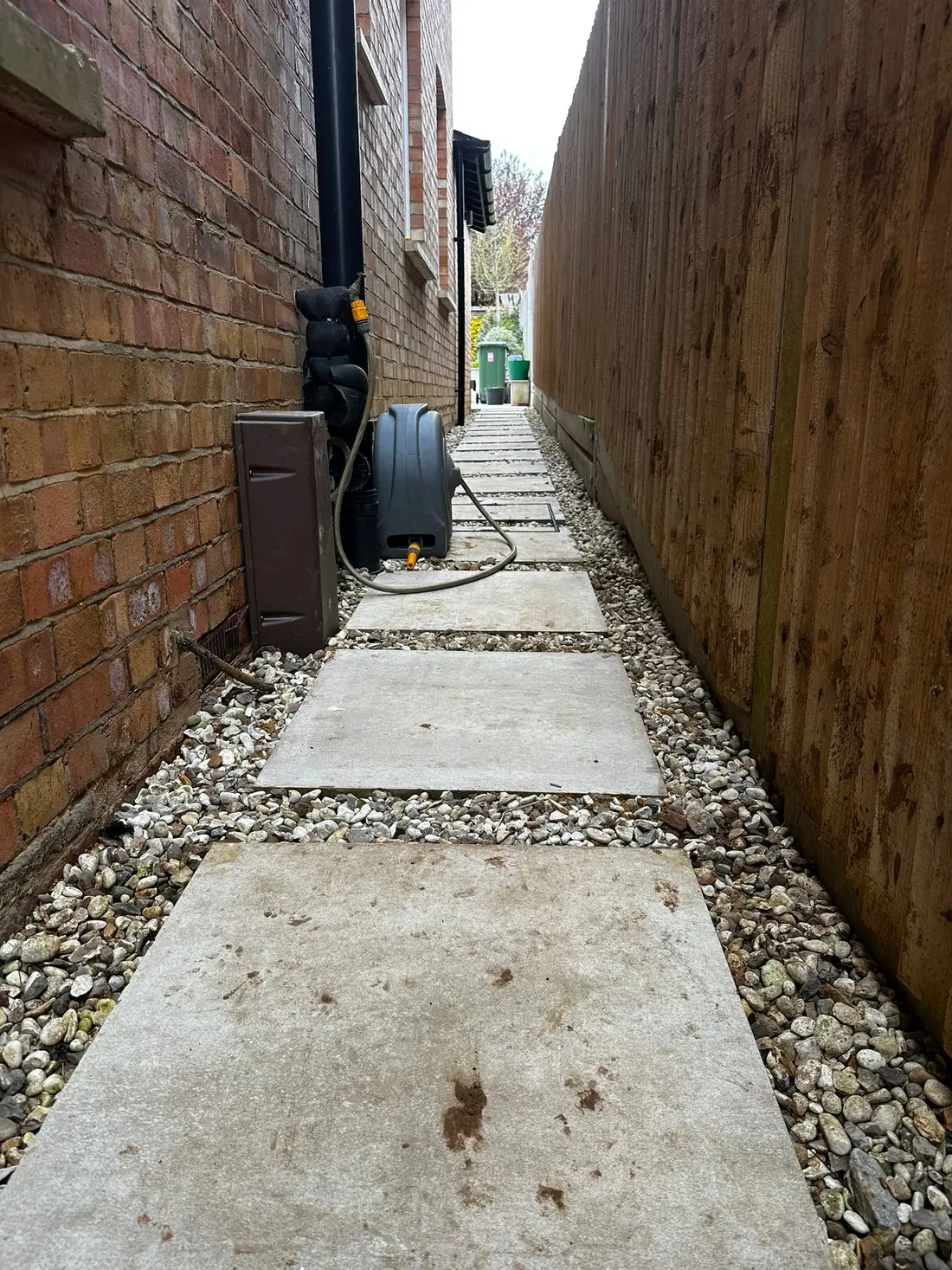
Ducting route installed alongside a building and the surface reinstated
Street Works UK guidance
02

Install ducting and shared trenching

Ducting laid at planned depth on correct bedding, colour-coded by service so it is identifiable when the ground is next opened, with warning marker tape above. Where a route crosses a carriageway we handle the crossing and the traffic management rather than leaving it as somebody else’s problem.

  • Colour-coded ducting laid to planned depth and separation
  • Shared multi-utility trenching where routes coincide
  • Road crossings and highway works with traffic management
  • UKPN cable ducting integrated alongside water
Carriageway reinstated and road markings replaced after utility works
Proved and recorded
03

Prove, record and reinstate

Every duct is proved through before backfill and left with a draw rope, so cabling can be pulled later without anyone reopening the ground. Marker tape goes in above, the route is recorded as-built, and the surface is reinstated to the highway authority’s specification.

  • Ducts proved and draw ropes left in place
  • Warning marker tape laid above the run
  • As-built records of route, depth and duct allocation
  • Carriageway, footway and verge reinstated to specification

Why Cascade

A water contractor who understands the whole corridor.

Ducting sits between the utilities, the highway authority and the main contractor. It goes wrong in the gaps between them.

  1. 01

    Street Works UK positioning as standard

    Ducts laid to the recognised guidance for the positioning and colour-coding of underground apparatus, so the next contractor to dig can identify what they have found.

  2. 02

    Water infrastructure specialists first

    Thirty years on water mains and services means the potable duct in a shared trench is installed by people who understand contamination risk and separation, not treated as one more pipe.

  3. 03

    Highway works handled in-house

    Road crossings, traffic management and reinstatement to the highway authority’s specification are ours, so the crossing is not a gap in the programme.

  4. 04

    Pre-qualified for contractor frameworks

    SafeContractor, SMAS Worksafe, Acclaim, Constructionline Gold and Achilles UVDB Silver Plus — utility and main contractor pre-qualification is already done.

  5. 05

    Plant and operatives are ours

    Excavation, ducting, crossings and reinstatement under one contract rather than four subcontractors and a coordination meeting.

  6. 06

    Records that survive the handover

    As-built route, depth and duct allocation recorded as the work proceeds. A duct nobody can locate later has wasted the trench it went in.

Independently assessed

Full accreditation detail on the about page.

Technical detail

What governs where a duct sits.

Positioning, colour and cover come from Street Works UK guidance — the standard formerly published by NJUG. Individual utilities and highway authorities can require more, and where they do, theirs takes precedence.

Guidance
Street Works UK
Formerly NJUG, the National Joint Utilities Group. Its guidance on the positioning and colour-coding of underground apparatus is the reference the whole industry works to, which is what makes a shared corridor legible to everyone who follows.
Water duct colour
Blue
Blue identifies potable water. Colour-coding is what stops the next excavation guessing: yellow for gas, black or red for electricity, grey or green for telecoms, orange for street lighting.
Water cover
750mm typical
Typical minimum cover for water in footway or verge, deeper under carriageway. Water generally sits deepest in a shared corridor, which is why its position is fixed first and the others are planned around it.
Telecoms cover
~250–350mm
Telecoms sits shallowest of the common services in footway. The spread from telecoms to water is the reason relative depth has to be designed rather than decided by whoever digs first.
Marking
Tape above the run
Coloured warning marker tape is laid above the duct at a set height so a future excavation meets the tape before it meets the apparatus.
Handover state
Proved + draw rope
Each duct is proved through and left with a draw rope in it, so the cable or pipe it was installed for can be pulled later without reopening the ground.
  • Separation is about more than damage

    Minimum separations between services exist to protect the potable supply as well as to prevent strikes. A water duct run too close to a fuel or drainage service is a contamination question, not simply a mechanical one.

  • The corridor has to allow for maintenance

    Services are laid so any one of them can later be excavated without exposing the others. A tightly stacked trench is cheap to install and expensive for the rest of its life.

  • Road crossings are the constraint on the programme

    Crossings need permits, traffic management and a reinstatement specification agreed with the highway authority. They should be identified at design stage, because they set the dates the rest of the route works around.

  • Spare ducts are cheap now and impossible later

    Adding a spare duct while the trench is already open costs very little. Adding one afterwards means excavating, closing a road and reinstating all over again — which is why it is worth deciding capacity before backfill, not after.

Benefits

What coordination is actually worth.

  • 01

    One excavation, not three

    Shared trenching removes duplicate digging, duplicate traffic management and duplicate reinstatement from the budget.

  • 02

    A shorter programme

    Utilities installed in one coordinated operation instead of sequentially, each waiting for the last contractor to demobilise.

  • 03

    Cabling without reopening the ground

    Ducts proved and roped at installation mean the cable pull is a pull, not another excavation and another road closure.

  • 04

    Fewer strikes later

    Colour-coded ducts, marker tape and accurate as-builts are what stop the next contractor putting a bucket through your infrastructure.

  • 05

    Reinstatement that passes

    Carriageway, footway and verge restored to the highway authority’s specification, so the inspection is not a second visit.

  • 06

    Room to grow

    Spare capacity added while the trench is open costs almost nothing and saves an entire operation the day the site needs another service.

Common questions

Before you enquire.

The questions we are asked most often about this service, answered without the sales gloss.

See all FAQs
What is NJUG, and is it still the standard?

NJUG was the National Joint Utilities Group, which published the recognised guidance on positioning and colour-coding underground apparatus. The organisation is now Street Works UK and the guidance continues under that name. When a specification asks for "NJUG compliance" it means ducts laid at the correct relative depths and separations, colour-coded by service and marked — which is what we install to.

Why does duct colour matter if it is buried?

Because it will not stay buried forever. Colour-coding is how the next contractor to open that ground identifies what they have exposed before they damage it. Blue for water, yellow for gas, black or red for electricity, grey or green for telecoms — it is the difference between a service being recognised and being cut.

Can several utilities really share one trench?

Yes, provided the corridor is designed for it. Each service has its own required depth and separation from the others, so a shared trench is planned rather than improvised — water deepest, telecoms shallowest, with the rest positioned between. Done properly it removes duplicate excavation, traffic management and reinstatement. Done badly it makes every future maintenance job harder.

What is a draw rope and why does it matter?

A draw rope is a line left inside the duct at installation. When the cable or pipe is eventually pulled through, it is attached to the rope and drawn along the duct — no excavation, no road closure. A duct installed without one, or one that has not been proved through, can be effectively useless when the time comes to use it.

Do you handle road crossings and traffic management?

Yes. Crossings, highway works and the associated traffic management are carried out in-house, and reinstatement is to the highway authority’s specification. Crossings usually set the critical dates on a ducting programme, so they are worth identifying at design stage rather than when the trench reaches the kerb.

Should we install spare ducts?

Almost always. While the trench is open, an additional duct is a marginal cost. Once it is backfilled and the surface reinstated, adding one means a fresh excavation, fresh permits and fresh reinstatement. Deciding capacity before backfill is one of the cheapest decisions on a site.

Ducting enquiry

Send the route and we will tell you what shares a trench.

A site layout and a list of the services the scheme needs is enough for us to say where coordination saves you an excavation — and where it genuinely will not.

Or reach us directly

Burst main or major leak? The freephone line is answered 24 hours a day.

Request a quote

Site layouts, utility drawings, correspondence or photos of the problem. Up to 5 files, 15MB in total — PDF, JPG, PNG, HEIC, DWG or DXF.

We use these details to answer your enquiry and nothing else.