
Impact moling: new pipe, without the trench

A pneumatic mole drives underground between two small pits and pulls the new pipe through behind it. No trench across the driveway, no lifted paving, and no reinstatement bill for the surface that never got opened.

Burst pipe or major leak?Call 0800 520 0043

The service

The pipe is cheap. The ground above it is not.

On most domestic and small commercial pipe jobs, the pipe itself is a minor cost. What makes the invoice is the ground: breaking out a block-paved driveway, digging a trench across a landscaped garden, then putting all of it back so it looks like nothing happened. Open-cut a 20 metre run and you are paying for 20 metres of reinstatement.

Impact moling removes most of that. We dig two small pits — one to launch from, one to receive — and a pneumatic mole drives between them, displacing the soil sideways to form a bore rather than removing it. The new MDPE pipe is drawn through behind the mole. Everything between the two pits is never touched.

It is the default method for supply pipe replacement and new connections wherever the ground will take it. It is not universal, and the honest part of this service is telling you when it will not work before we start rather than after.

What we do

Prove the route, drive the bore, pull the pipe.

The bore itself takes a fraction of the day. Almost everything that decides whether it goes well happens before the mole is switched on.

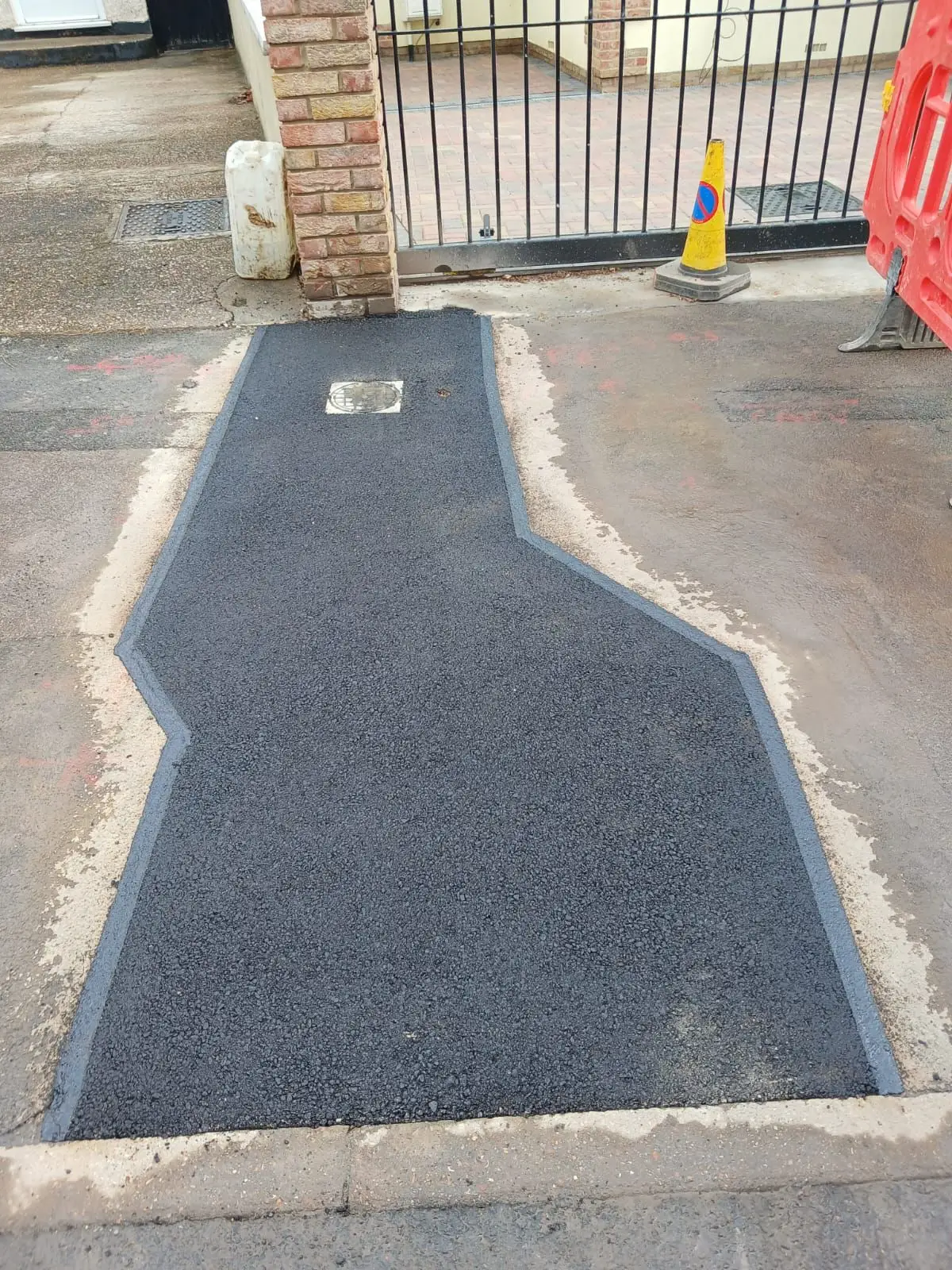
Surface left intact along the line of a trenchless pipe installation
Route proved first
01

Survey the route before committing to it

A mole travels blind in a straight line, so what is on that line has to be known first. We trace existing services, confirm the pipe route and depth, and check ground conditions along the whole run. Where records are thin — and for older properties they usually are — we prove the line rather than trusting the drawing.

  • Existing buried services traced and marked
  • Ground conditions assessed along the full route
  • Launch and reception positions chosen to give a clear straight run
  • An honest call on whether moling is the right method here
Narrow launch pit opened for a trenchless pipe installation
Two pits, no trench
02

Drive the bore and draw the pipe through

The mole is set in the launch pit, aligned, and driven by compressed air along the planned line. It displaces soil outwards rather than excavating it, compacting a bore as it travels. When it reaches the reception pit the new blue MDPE is connected and pulled back through, leaving a continuous pipe with no buried joints along its length.

  • Pneumatic mole driven along a pre-planned straight line
  • Soil displaced to form the bore, not excavated
  • New blue MDPE drawn through in one continuous length
  • Runs of around 30 metres achievable in suitable ground
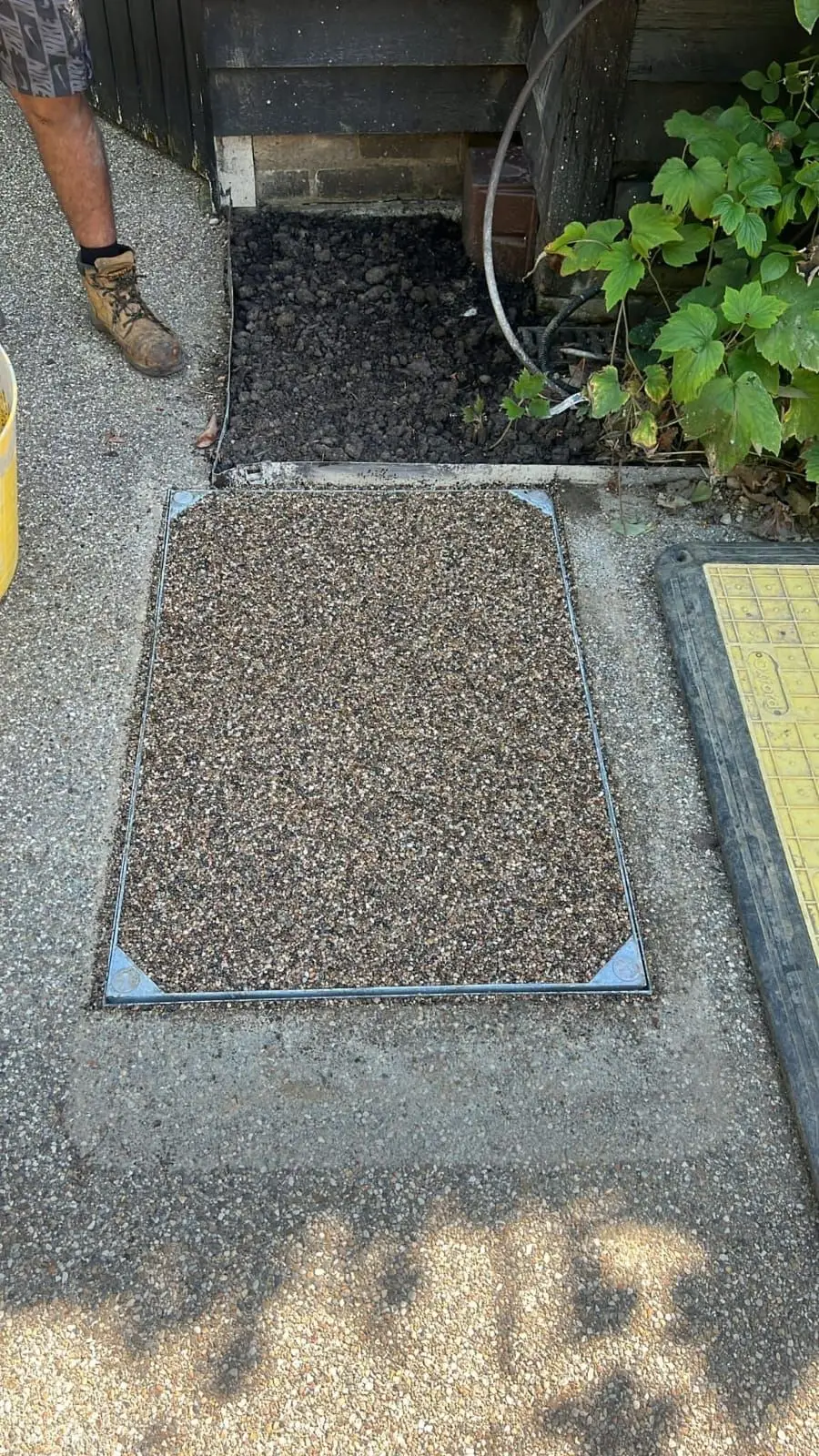
Water meter chamber set into a paved path after a trenchless installation
Minimal reinstatement
03

Connect, test and close the two pits

The new run is connected at both ends, pressure tested and flushed. Then the only ground that was ever opened — the two pits — is backfilled and reinstated. On a moled job that is typically a square metre at each end rather than a strip across the whole property.

  • Connection at the boundary and at the building
  • Pressure tested before the pits are closed
  • Two small areas reinstated instead of a full trench line
  • Tarmac, block paving and planting made good

Why Cascade

Moling is easy to sell and easy to get wrong.

A mole driven along an unproven line hits things. The value is in the survey and the judgement, not in owning the equipment.

  1. 01

    We survey before we commit

    Services traced, route proved and ground conditions checked before the mole is set. A mole that meets an unrecorded gas service or a concrete foundation is a far more expensive day than an open-cut would have been.

  2. 02

    We say when moling is wrong

    In rubble-filled made ground, around dense obstructions, or on a route crowded with existing services, a short open-cut is faster, safer and cheaper. We tell you that rather than starting and stopping halfway.

  3. 03

    Thirty years in the ground locally

    Three decades working under London and Home Counties streets means we know which areas throw up made ground, old foundations and unrecorded services before we arrive.

  4. 04

    Accredited for work on drinking water

    WaterSafe approved contractor, WIAPS registered and LRQA WIRS accredited — the pipe drawn through the bore is installed to the same standards as everything else we do.

  5. 05

    One team, including the reinstatement

    Survey, moling, connection, testing and making good the two pits are all ours. No separate groundworker to arrange once the water is back on.

  6. 06

    The right method, not the impressive one

    Moling is usually the best answer for a domestic supply pipe. It is not always the best answer, and we would rather recommend the cheaper method than defend the wrong one afterwards.

Independently assessed

Full accreditation detail on the about page.

Technical detail

What decides whether a bore will work.

Impact moling is a soil displacement technique. Whether it succeeds is mostly a question of what the soil is, what is in the way, and how far you are asking it to travel.

Method
Soil displacement
A pneumatic mole compacts soil outwards to form the bore rather than removing spoil. That is why there is nothing to cart away and why the surface above is undisturbed.
Typical run length
Up to ~30m
Achievable in suitable ground on a straight line. Longer runs are possible in good conditions; the practical limit is set by ground type and how accurately the line can be held.
Excavation required
Two pits
A launch pit and a reception pit, each typically around a square metre. On an open-cut the same job means a trench along the entire route.
Pipe installed
Blue MDPE
Drawn through in one continuous length behind the mole, so the finished run has no mechanical joints buried along it — a joint you cannot reach is a joint you do not want.
Depth of cover
750–1350mm
The bore is driven at the depth the regulations require for a supply pipe outside a building: no less than 750mm and no more than 1350mm below ground level.
Line control
Straight, pre-planned
A mole holds a straight line and cannot be steered around an obstacle mid-run. The route therefore has to be proved before launch rather than corrected during it.
  • Made ground is the usual disqualifier

    Ground filled with brick, concrete or demolition rubble deflects a mole off line or stops it. Older urban plots, former yards and anywhere previously built on are the common cases, and they are why the survey matters more than the equipment.

  • Other services set the route, not convenience

    Gas, electricity and telecoms along the same corridor dictate where a bore can safely run. Where a clear line cannot be found at a safe separation, open-cut is the correct answer rather than a calculated risk.

  • Trees are a consideration in both directions

    Moling avoids severing roots that a trench would cut through, which is often the reason to choose it near established planting. Equally, a substantial root plate can deflect a mole, so mature trees are surveyed rather than assumed around.

  • Displacement needs somewhere to go

    The technique relies on soil compressing outwards. Very shallow cover, or a bore run close to a wall or a slab, risks heave at the surface — which is why depth and offset are planned rather than improvised.

Benefits

Why customers ask for it by name.

  • 01

    The driveway survives

    Block paving, tarmac, resin and stone stay exactly as they are. There is no seam across them afterwards because nothing was cut.

  • 02

    Gardens and planting stay intact

    Lawns, borders and established planting are undisturbed, and root systems are not severed the way a trench would cut them.

  • 03

    Lower total cost on most jobs

    Less excavation and far less reinstatement. On a long run across a finished surface, the saving on making good is usually larger than the cost of the pipe.

  • 04

    Faster from start to water back on

    Most domestic replacements are a single day where the route can be moled, instead of several days of digging, laying and rebuilding a surface.

  • 05

    A continuous pipe with no buried joints

    The new run is drawn through in one length, so there is no mechanical joint along the route to work loose in ten years.

  • 06

    Less spoil, less mess, less waste

    Soil is displaced rather than dug out, so there is no spoil heap on the drive and nothing to take away and dispose of.

Common questions

Before you enquire.

The questions we are asked most often about this service, answered without the sales gloss.

See all FAQs
What is moling and how does it work?

Impact moling is a trenchless method of installing underground pipe. We dig two small pits — one to launch from and one to receive — and a pneumatic mole is driven by compressed air between them. It displaces the soil outwards to form a bore rather than excavating it, and the new pipe is drawn through behind it. Everything between the two pits is left completely undisturbed.

Will moling damage my driveway or garden?

That is precisely what it is designed to avoid. The only ground opened is the two pits, typically about a square metre each at either end of the run, and those are reinstated as part of the job. The surface in between — driveway, path, lawn or planting — is never touched, because the pipe passes underneath it.

When does moling not work?

Three situations mainly. Made ground full of brick or concrete rubble deflects or stops the mole. Dense obstructions such as old foundations or substantial tree root plates do the same. And a route crowded with gas, electricity or telecoms may not offer a safe line at adequate separation. In any of those cases a short open-cut is faster and safer, and we will tell you that before starting rather than partway through.

How long a pipe run can you mole?

Runs of around 30 metres are routinely achievable in suitable ground, and longer is possible where conditions are good. The limit is set by ground type and by how accurately the line can be held over distance, so the survey rather than a fixed number determines it on any given job.

Is moling cheaper than digging a trench?

On most jobs across a finished surface, yes — and the saving comes from reinstatement rather than from the pipework. Replacing a supply pipe under a block-paved driveway by open-cut means lifting and relaying the driveway; by moling it means two small pits. On a short run across bare soil the difference narrows considerably.

How long does a moled supply pipe replacement take?

A straightforward domestic replacement is commonly completed in a day, including the connection, pressure testing and reinstating the two pits. Difficult ground, a longer run, a highway crossing or a new connection application will extend it, and we give you the expected duration after the route survey rather than before.

Do you cover my area for moling?

Yes — Hertfordshire and London are core operating areas, alongside Bedfordshire, Essex, Cambridgeshire and Buckinghamshire. If you are unsure whether we reach your postcode, ask and we will tell you straight away.

Moling enquiry

Tell us what is above the pipe run.

A block-paved driveway, a lawn, a resin surface or a mature garden — what is on top is what decides whether moling saves you money. Describe the route and we will tell you whether it is the right method.

Or reach us directly

Burst main or major leak? The freephone line is answered 24 hours a day.

Request a quote

Site layouts, utility drawings, correspondence or photos of the problem. Up to 5 files, 15MB in total — PDF, JPG, PNG, HEIC, DWG or DXF.

We use these details to answer your enquiry and nothing else.