Lead pipe replacement for safer drinking water

Lead has not been permitted in new UK plumbing since 1970, but a great deal of it is still in the ground under older streets. We replace it with modern blue MDPE, disconnect the old run and cap it off in the ground — usually without opening your driveway.

Burst pipe or major leak?Call 0800 520 0043

The service

Lead does not fail. That is the problem with it.

A lead supply pipe can sit under a garden for a century without leaking. It gives no warning, no drop in pressure and no wet patch on the lawn — which is exactly why so much of it is still in service. What it does instead is leach, slowly and invisibly, into the water standing in it.

Lead was banned from new UK plumbing in 1970, and the current limit for lead in drinking water is 10 micrograms per litre. Properties built before 1970 — a large part of London’s housing stock and most older streets across Hertfordshire, Bedfordshire and the surrounding counties — may still have a lead supply pipe running from the public–private boundary to the building, and that section is the responsibility of the property it supplies rather than the water company’s.

Cascade is a WaterSafe approved contractor and operates under the WIAPS approved plumber scheme. We identify what is actually there, replace the lead run in modern blue MDPE, and use trenchless moling wherever ground conditions allow so driveways, paths and planting stay intact.

What we do

Confirm it is lead. Replace all of it. Prove it is gone.

Half a lead replacement is worse than none — which is why the middle stage below matters more than it sounds.

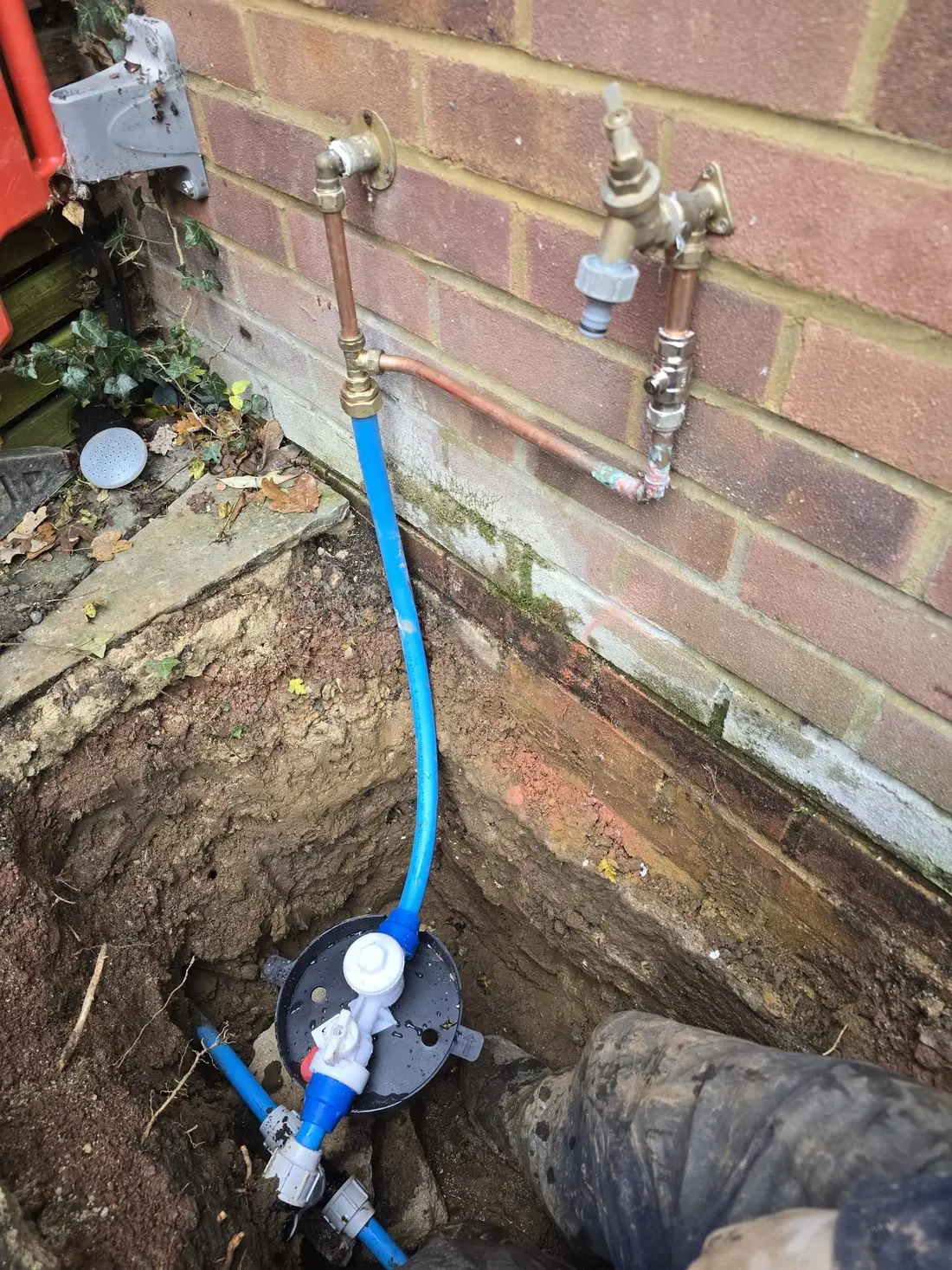
Supply pipe and internal connection exposed at the wall of a property
Survey before excavation
01

Identify what is actually there

Lead is dull grey, soft enough to mark with a coin, and its joints are rounded blobs rather than threaded fittings. Tapped, it thuds rather than rings. We confirm the material at the internal stopcock and trace the run to the boundary, because plenty of properties turn out to have lead internally and something else outside, or the reverse.

  • Material confirmed at the stopcock and along the run
  • Route and depth traced before any ground is opened
  • Internal pipework checked as well as the external supply
  • A clear answer on how much of the run is actually lead
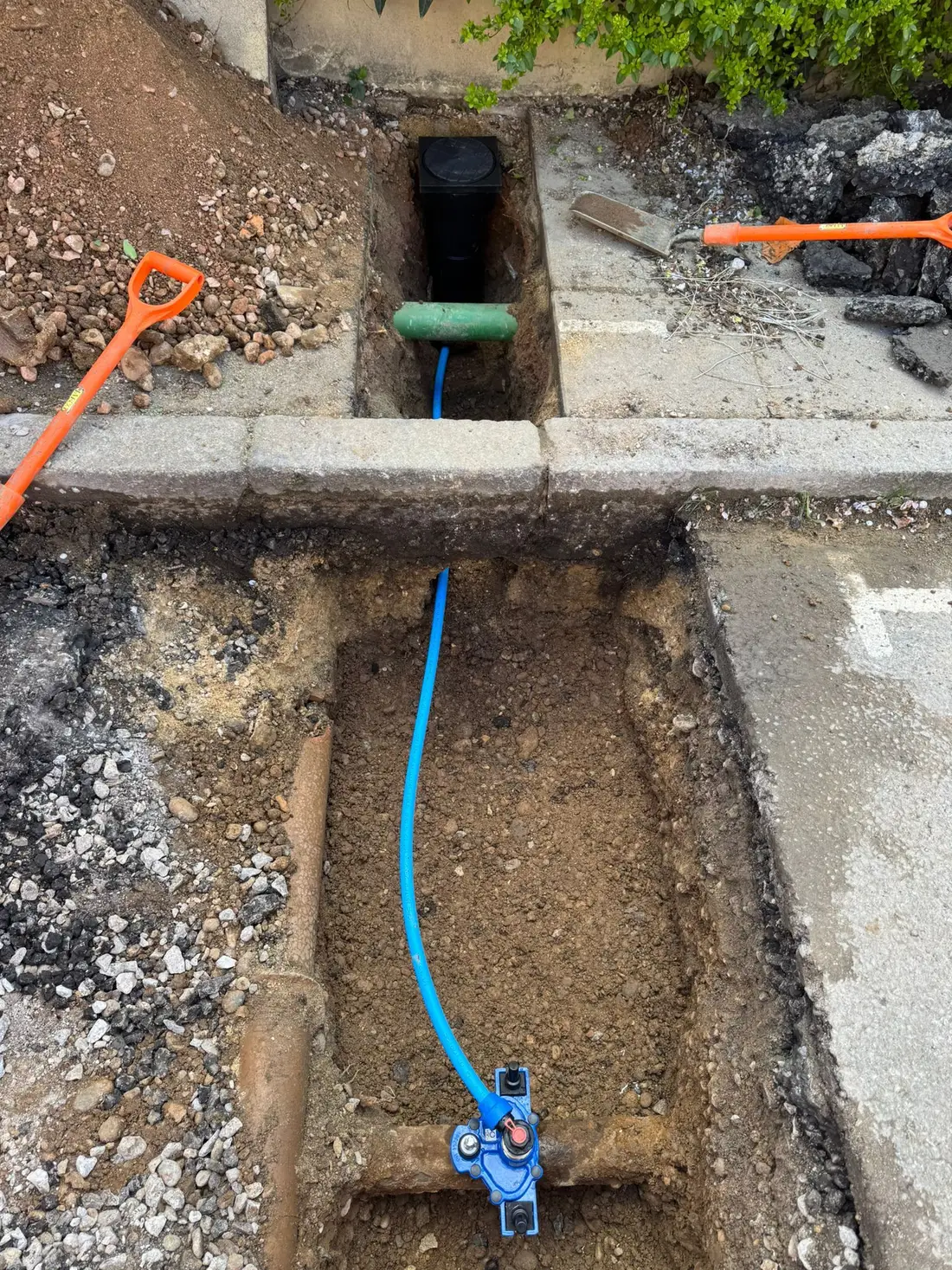
New water service connection installed in the footway outside a property
Whole run, not partial
02

Replace the whole run, not part of it

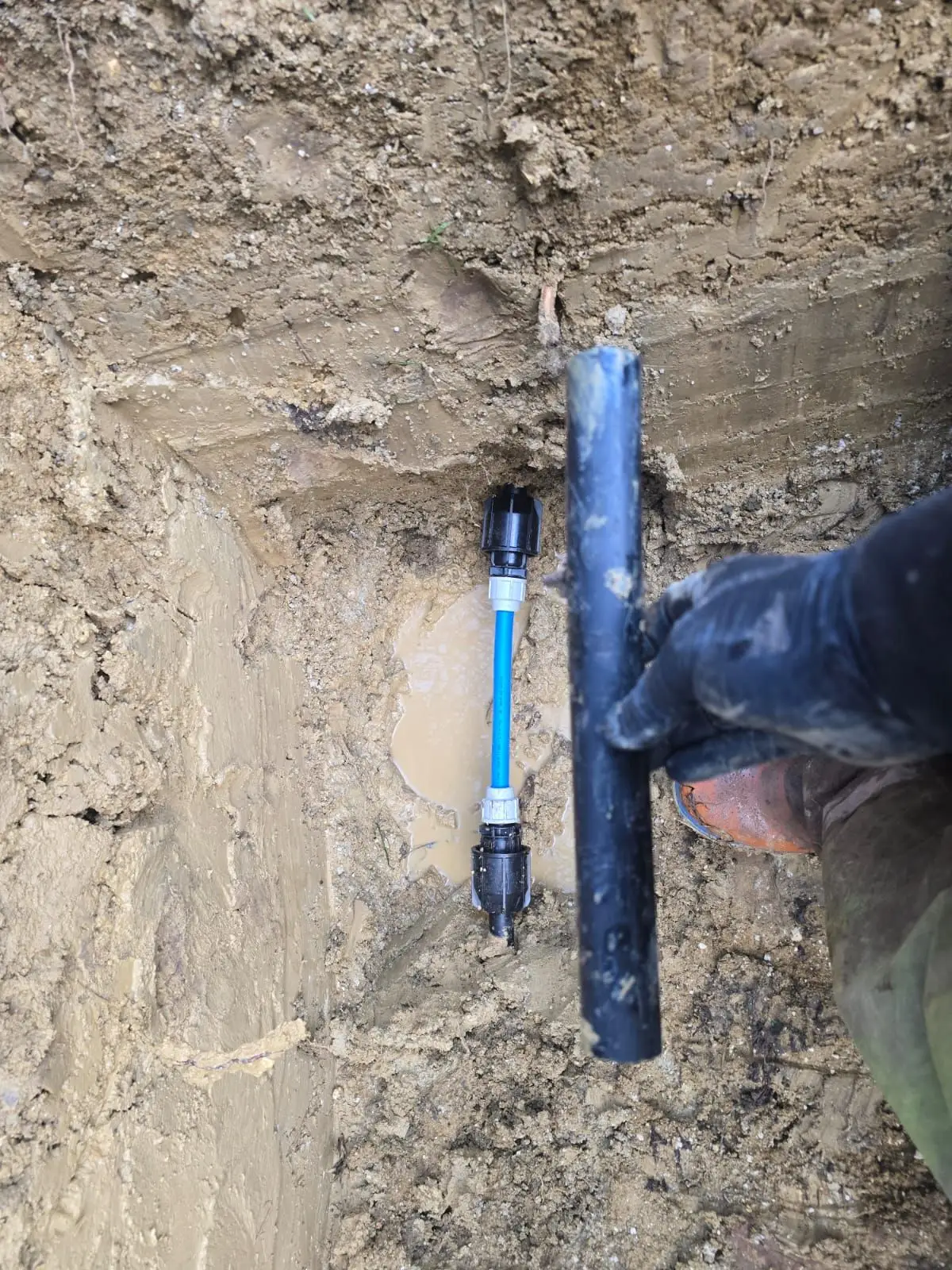
Disturbing lead pipework releases lead. Replacing only part of a run can leave the water passing through the remaining lead at a higher concentration than before, for weeks. So we replace the full private length, from the public–private boundary to the internal stopcock, in one go. The old lead run is disconnected at both ends, capped off and left in the ground — it no longer carries any water, and nothing has to be dug up to get it out. We will also tell you if the water company needs to renew their side to complete the job.

  • Full private run replaced in blue MDPE, boundary to stopcock
  • Trenchless impact moling under driveways, paths and lawns
  • Internal stopcock renewed where it is at the end of its life
  • Advice on getting the water company’s section renewed too
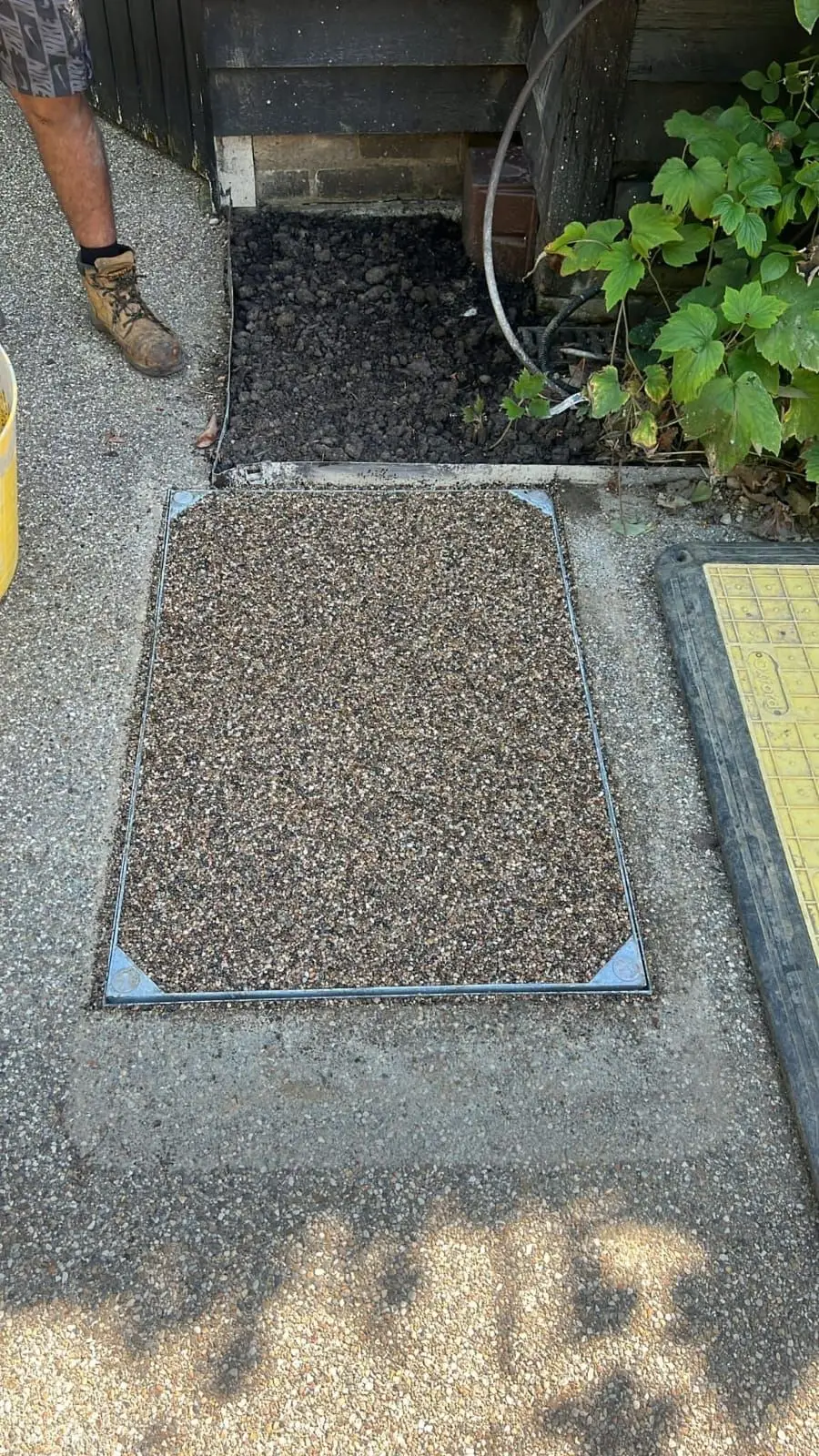
Path reinstated after a lead supply pipe was replaced
Reinstatement included
03

Test, flush and reinstate

The new run is pressure tested and thoroughly flushed before it is handed back, so nothing left over from the installation reaches a tap. Then the surface goes back — tarmac, block paving, paths and planting — as part of the job rather than as a separate trade you have to arrange afterwards.

  • Pressure tested before backfill and on completion
  • System flushed through before handover
  • Tarmac, block paving, paths and planting reinstated
  • Old lead run disconnected, capped off and left in the ground

Why Cascade

Work on drinking water is a regulated trade.

Replacing a lead supply pipe means working on a potable system under the Water Supply (Water Fittings) Regulations. These are the schemes that permit it.

  1. 01

    WaterSafe approved contractor

    WaterSafe is the UK register of approved plumbers and contractors qualified to work on drinking water systems — the straightforward way to check that whoever touches your supply is competent to.

  2. 02

    WIAPS approved plumber scheme

    Registration under the Water Industry Approved Plumber Scheme, covering work carried out under the Water Supply (Water Fittings) Regulations.

  3. 03

    Thirty years on supply pipework

    Over three decades replacing private supply pipes across London, Hertfordshire and the surrounding counties. Lead replacement is routine work here rather than an occasional job.

  4. 04

    Trenchless wherever the ground allows

    Impact moling draws the new pipe underground between two small pits, so in most cases a driveway or a lawn is never lifted at all.

  5. 05

    We replace the whole run

    Partial replacement can raise lead levels temporarily rather than lowering them. We do the full private length or we explain why the job is not worth doing yet.

  6. 06

    One team, reinstatement included

    Survey, replacement, testing and putting the surface back are all ours. No groundworks subcontractor to chase once the water is back on.

Independently assessed

Full accreditation detail on the about page.

Technical detail

The numbers behind lead in drinking water.

Lead replacement is driven by a health standard and a regulation, not by preference. These are the figures the work is judged against.

Drinking water limit
10 µg/l
The current UK limit for lead in drinking water, measured at the consumer’s tap. Lead dissolves into water standing in the pipe, so the first draw of the morning is typically the worst.
Lead banned from new plumbing
1970
Lead has not been permitted in new UK plumbing since 1970. A property built before then, and never re-plumbed, is the common case for a surviving lead supply pipe.
Replacement material
Blue MDPE
Medium-density polyethylene to BS EN 12201, blue for below-ground potable water. It does not corrode, does not leach, and is jointed without solvent.
Typical replacement size
25mm
Standard for a single dwelling. Old lead runs are frequently narrower than their modern equivalent, so a like-for-like replacement usually improves flow as well as water quality.
Depth of cover
750–1350mm
A supply pipe laid outside a building must sit no less than 750mm and no more than 1350mm below ground. Old lead is often shallower than that, which is a second reason it needs renewing rather than repairing.
Ownership boundary
Public / private boundary
From the point where it crosses onto private land to the building is private pipework, and the responsibility of the property it supplies. The water company owns the pipe on the public side — which may also be lead.
  • Partial replacement can make things worse

    Cutting into lead disturbs the internal scale that has built up over decades, and replacing only part of a run can raise lead concentrations in the remaining section for a period afterwards. This is the single strongest argument for doing the whole private length at once.

  • Ask the water company about their side

    If your supply pipe is lead, the communication pipe on the water company’s side may be too. Many companies will replace their section when the customer replaces theirs — it is always worth asking before the work is booked, because doing both together is the only way to remove lead from the whole route.

  • Lead is not always obvious indoors

    Modern internal plumbing does not mean the buried run is modern. It is common to find copper inside a house and lead in the ground outside it, replaced piecemeal by different owners over the years.

  • Interim measures are not a fix

    Running the tap before drinking reduces exposure from water that has stood in the pipe, and filters certified for lead reduction help. Neither removes the lead, and neither is a substitute for taking the pipe out.

Benefits

What replacing lead actually changes.

  • 01

    Lead out of the drinking water

    The exposure is removed at source rather than managed around, which matters most for children and during pregnancy.

  • 02

    Better flow, usually

    Old lead runs are often narrower and internally furred. A correctly sized MDPE replacement commonly improves pressure and flow as a side effect.

  • 03

    A pipe with decades left in it

    Modern MDPE does not corrode, tolerates ground movement, and has no mechanical joints buried along the run to work loose.

  • 04

    Your surfaces stay where they are

    Trenchless moling means block paving, tarmac and lawns are usually never lifted — just two small pits at either end.

  • 05

    Something to show a buyer

    A surveyor flagging lead pipework during a sale is a common late complication. Certification that it has been replaced closes that off.

  • 06

    Peace of mind that is actually justified

    Not "we ran the tap for a while" — the pipe is gone, the run is tested, and the result does not depend on anyone remembering to do anything.

Common questions

Before you enquire.

The questions we are asked most often about this service, answered without the sales gloss.

See all FAQs
How do I know if I have a lead water pipe?

Look at the pipe where it enters the property, usually near the internal stopcock. Lead is dull grey, unpainted, soft enough to mark with a coin, and its joints are rounded swellings rather than threaded fittings. Tapping it gives a dull thud rather than a metallic ring. If the property was built before 1970 and the supply has never been renewed, lead is a real possibility — we can confirm it during a survey.

Is a lead pipe dangerous if the water looks fine?

Lead in water is colourless, tasteless and gives no visual clue at all, so appearance tells you nothing. Lead dissolves into water standing in the pipe, which is why concentrations are highest first thing in the morning or after a period away. The health risk is well established, particularly for young children and during pregnancy, and the current UK limit is 10 micrograms per litre.

Can you replace just the section of lead I know about?

We would strongly advise against it. Cutting into lead disturbs the scale inside it, and replacing part of a run can increase lead concentrations in the section left in service for a period afterwards — the opposite of what you are paying for. We replace the full private length, from the public–private boundary to the internal stopcock, and cap off the old run, so no lead is left carrying your water.

Who pays for the lead pipe replacement?

The supply pipe from the public–private boundary to your building is private pipework and the responsibility of the property it supplies, so that section is at your cost. The communication pipe on the water company’s side is theirs — and many water companies will replace their section when a customer replaces theirs. It is always worth asking them before the work is booked.

Will you have to dig up my driveway?

Usually not. We use trenchless impact moling wherever ground conditions allow, which draws the new pipe underground between two small pits and leaves everything between them untouched. Where the ground will not take a mole — heavy clay with obstructions, made ground full of rubble, or a route crowded with other services — we will say so before starting, and any excavation is fully reinstated.

How long does a lead pipe replacement take?

A straightforward domestic replacement is commonly a one-day job where the route can be moled and the connection is simple. Longer runs, difficult ground, a highway crossing or a new connection application will extend that. We give you the expected duration after the survey, once the route and the method are actually known.

Does replacing the pipe fix everything immediately?

The new run is flushed thoroughly before handover, and once the private lead is gone the source of the exposure is gone with it. If the water company’s communication pipe is still lead, some risk remains on that section until they renew it — which is why we tell you what is on their side as well as yours.

Lead pipe enquiry

Not sure whether it is lead? Send us a photo.

A picture of the pipe where it enters the property, near the internal stopcock, is usually enough for us to tell you what you are looking at before anyone visits.

Or reach us directly

Burst main or major leak? The freephone line is answered 24 hours a day.

Request a quote

Site layouts, utility drawings, correspondence or photos of the problem. Up to 5 files, 15MB in total — PDF, JPG, PNG, HEIC, DWG or DXF.

We use these details to answer your enquiry and nothing else.